
Case Study: Agrogene Solutions Turn Bee Health Science Into a Scalable Commercial Service
Honey bee colonies are under growing pressure. Canadian beekeepers lost an estimated 34% of their colonies over the 2025-26 winter, following several years of unusually high losses. Parasites such as Varroa mites, viruses, disease, weather and other stresses can weaken a colony, and by the time the problem becomes obvious, the opportunity to intervene may already be shrinking.
That matters far beyond the hive. Honey bees play a critical role in pollinating Canadian crops, with their contribution to agriculture measured in the billions of dollars each year. For beekeepers, healthier colonies also mean fewer losses, stronger operations and a better chance of protecting the apiaries they have spent years building.
AgroGene Solutions is tackling the problem by giving beekeepers something they have historically lacked: an earlier look at what is happening inside the colony. Using a simple, non-invasive hive sample, AgroGene’s laboratory tests for pathogens as well as biological indicators of immune activity and energy reserves. The goal is to identify emerging health threats before visible symptoms appear, while there is still time for the beekeeper to respond.
The science was working. The next challenge was making it scalable. As demand grew, every sample still had to be matched, interpreted, turned into a report and delivered largely by hand. AgroGene partnered with NorthBound Advisory to build the digital platform that could turn its diagnostic science into a scalable commercial service.
Founded in Moncton, New Brunswick, AgroGene now serves beekeepers across Canada, with distribution partners including Dancing Bee Equipment and Bee Maid.
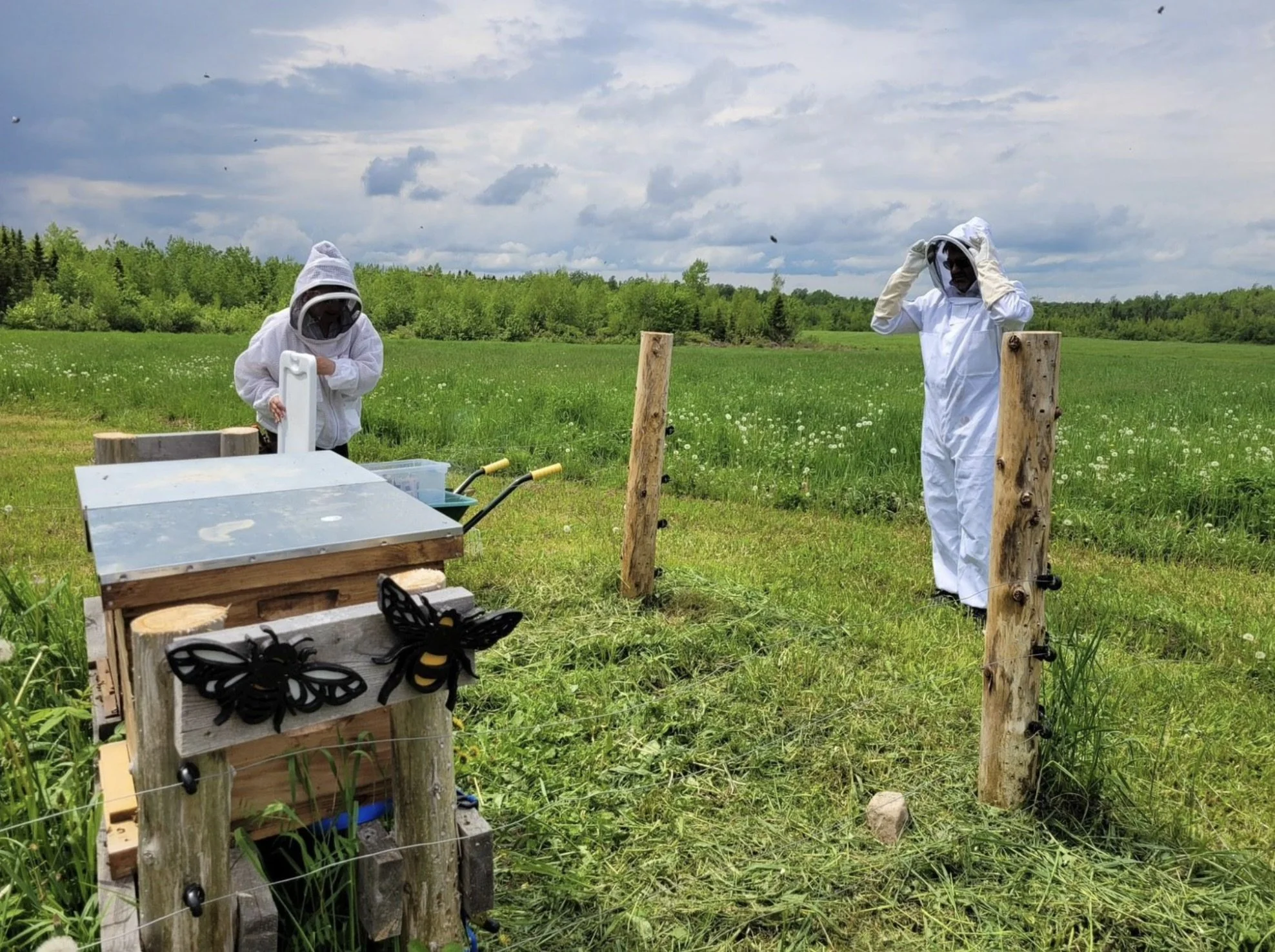
AgroGene sampling honeybee colonies at a partner apiary in New Brunswick.
Challenges
Getting a sample from the hive to a finished report involved manual work at nearly every step. Staff matched each returned sample to the right hive and customer, interpreted raw laboratory files, then built each report in a design tool, saved it as a PDF and emailed it out. A busy batch could take a full day. Even when customers submitted several samples together, each was processed and sent separately.
Kit ownership and prepaid tests were tracked informally, creating uncertainty and opportunities for error. Results were scattered across spreadsheets, files and email, making it difficult to track a colony’s health over time. Every new customer added more manual work. With plans to expand into new regions and eventually other species, AgroGene needed a more reliable and efficient way to deliver its service.
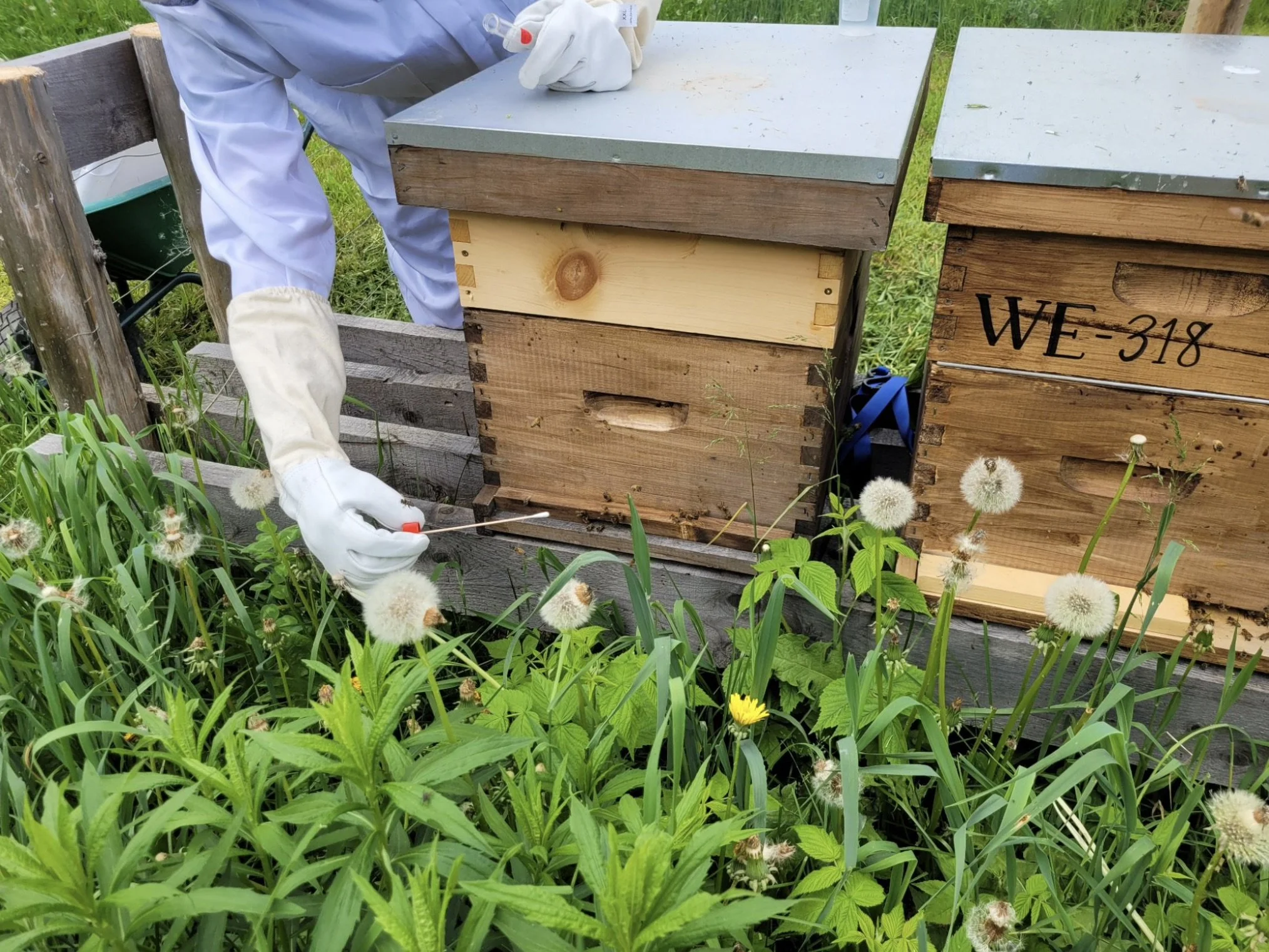
A non-invasive sample taken at the hive is where every AgroGene test begins.
What NorthBound Advisory Built
A private portal where beekeepers see their results, plus the internal tools the laboratory and office staff use.
Test kits that activate themselves, so a kit is tied to its customer from the moment it is ordered.
Automatic handling of laboratory files, including matching every result to the right sample, hive and customer.
AgroGene’s scientific rules built in where the science team can review and change them without rewriting software.
Branded health reports, written in plain language and produced automatically.
Customer, kit and prepaid test management covering online sales, invoicing and bulk orders.
How It Was Delivered
NorthBound Advisory delivers through its Applied AI Delivery Method, which turns a defined business problem into a secure, production-ready solution while preserving the engineering discipline required for long-term reliability and value. It runs in five steps:
Align: define the business problem, the users, the outcomes and the measures.
Decide: determine whether to adopt, configure, integrate, augment or build.
Engineer: apply the NorthBound AI Software Development Lifecycle and 10-Pillar Technology Excellence Model.
Validate: test security, functionality, human controls, cost and business value.
Operate: deploy, monitor, maintain and continuously improve.
For AgroGene, that meant mapping how the business actually worked before changing any of it, then making two decisions that shaped everything after. The online store would stay as it was, remaining the place where customer accounts, orders and billing live, while the new platform would own the laboratory side: kits, samples, results and history. And AgroGene’s scientific thresholds would sit in a layer the science team can read and revise rather than buried in software, so the company can refine its science without waiting on a release.
The build then followed the work that hurt most. Kits became self-activating. Uploading a results file began triggering processing on its own, with the platform validating the file and matching the results, and anything it could not resolve flagged for a person to check rather than passed quietly into a customer report. Reports became something the system produced and published rather than something a person assembled.
AgroGene had a documented architecture in March and a working platform processing real laboratory files by the end of May. AI-assisted software engineering compressed the build, while architecture and security controls, testing and human review kept the result something the company can keep building on. Regular working sessions kept it aligned with how the laboratory actually operates rather than how it looked on paper.
For decision makers, this is where NorthBound Advisory’s value is strongest. The firm helps startups clarify the business problem, assess the technical landscape, make informed platform decisions and execute quickly enough to create momentum.
Business Results
The clearest measure is what used to take a day. A recent batch of 100 samples was reported and delivered in an hour. The same work would previously have consumed a full day of sorting, interpreting and emailing by hand, and it grew heavier with every customer AgroGene won.
Beekeepers now receive their pathogen, immune activity and energy reserve results within three business days, in a private portal they can return to. Instead of a single PDF sitting in an inbox, they have a record of each colony they can follow from season to season. Customers who send several samples get one combined report rather than a string of separate emails.
For AgroGene, the change is about capacity as much as speed. Turnaround no longer depends on how many hours the team can find, so winning more customers does not simply mean more manual work. Leadership has visibility into testing activity, customers and prepaid tests that did not exist before, and the business can serve online, invoiced and bulk customers through one system.
Underneath it, the original laboratory data is preserved and the scientific rules are written where scientists can read them. That matters for what comes next. Every result is now structured and traceable, which is the foundation AgroGene needs for trend detection, early warning and AI-supported interpretation.
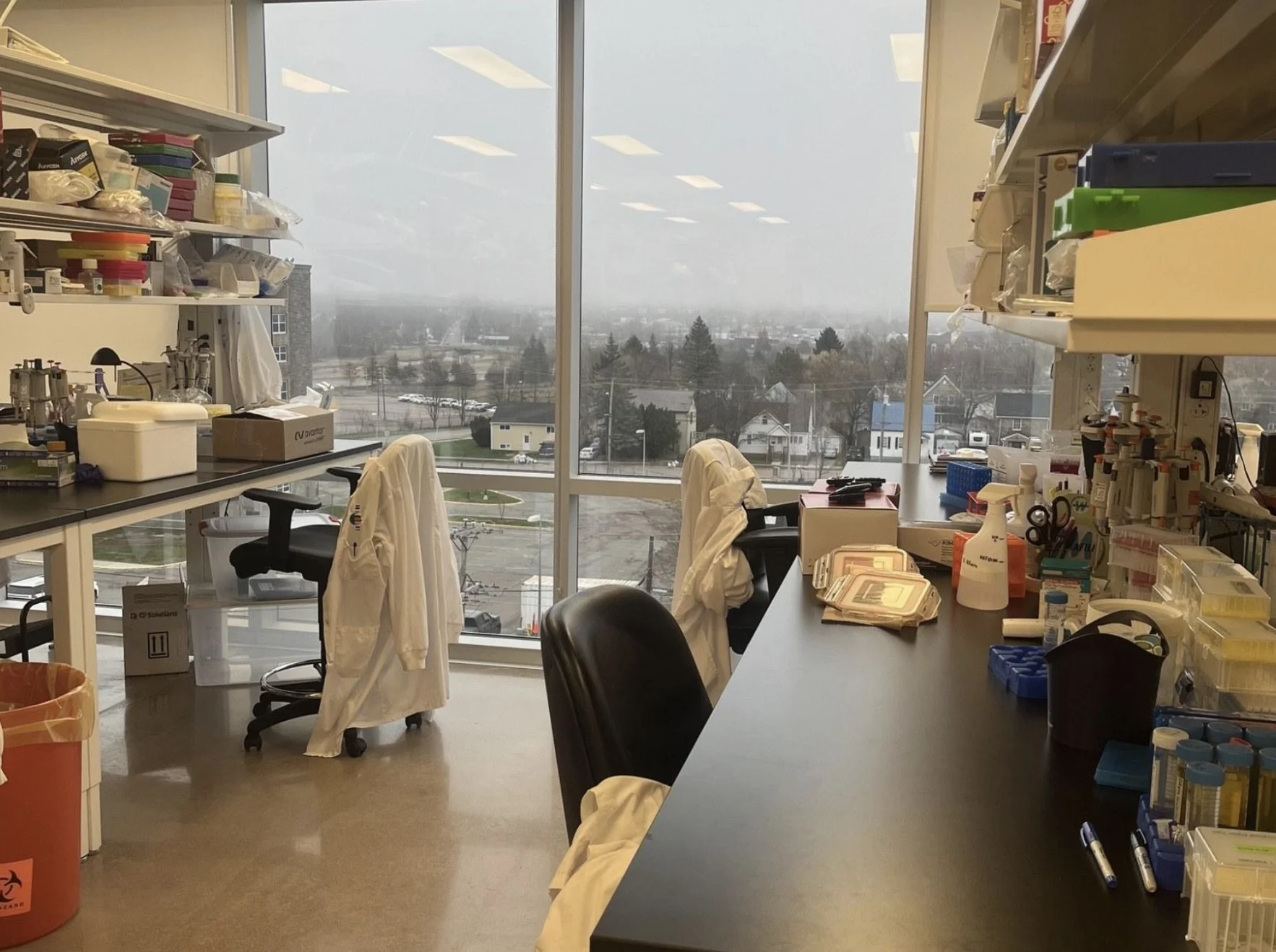
The AgroGene laboratory in Moncton, New Brunswick, where samples are tested.
Recognition at Startupfest
In July 2026, AgroGene won the $100,000 Best of the Fest Investment Prize at Startupfest in Montréal, selected from 275 companies pitching at the event’s sixteenth edition. Startupfest summed the company up as a startup protecting the food system by protecting its smallest workers.
Pitching from the stage, CEO Pascale Michaud described what AgroGene had put together: “We have discovered how to detect infections earlier, before symptoms appear. We pair a molecular diagnostic with a data platform to help beekeepers keep their hives alive.” The second half of that sentence is the platform described in this story. The diagnostic proves the science. The platform is what turns it into a service a beekeeper can buy, and a business that can grow.
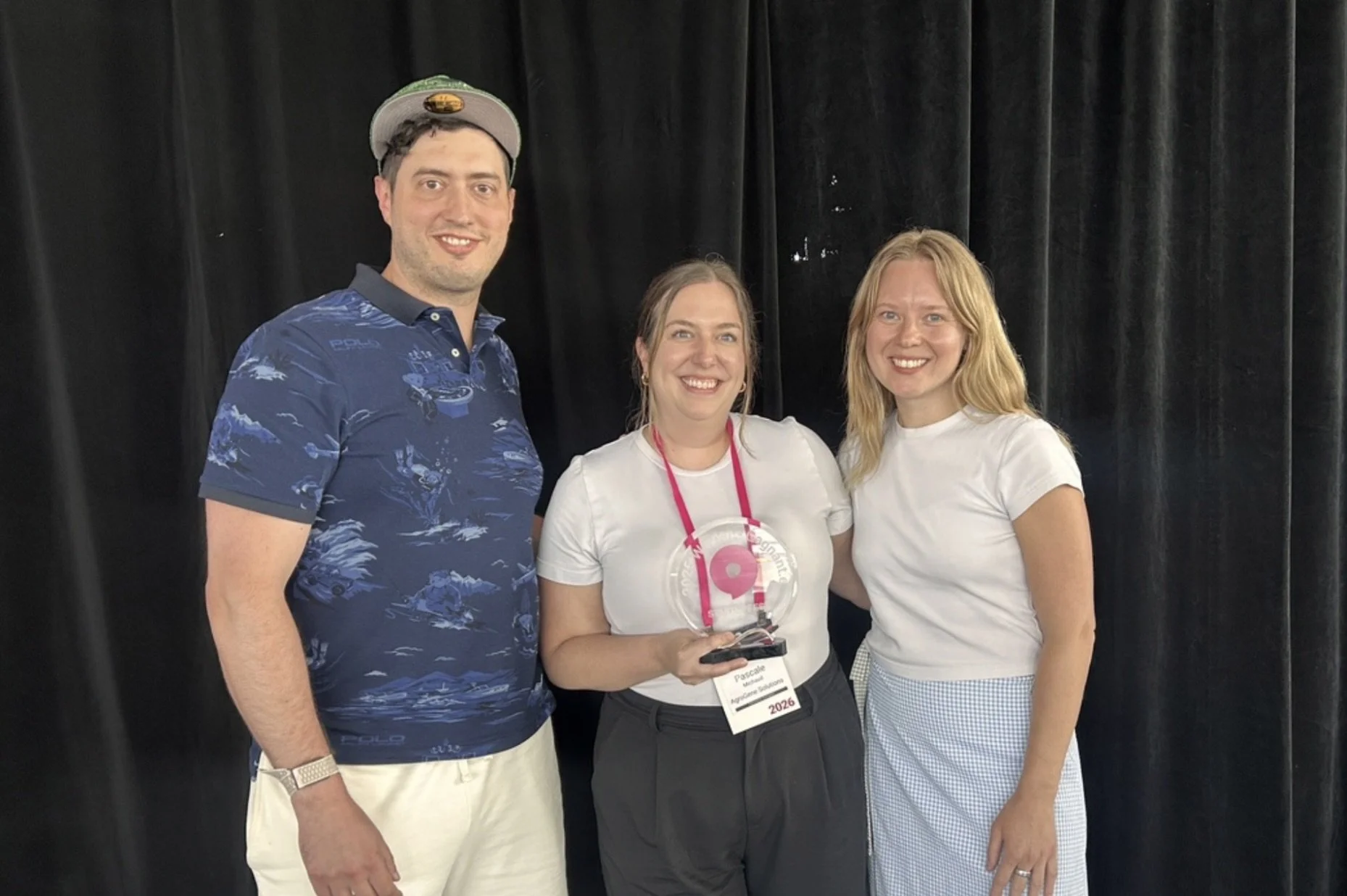
AgroGene winning the Best of the Fest Investment Prize at Startupfest in Montréal.
“We built AgroGene to give beekeepers an early warning they never had. The science was ready long before our systems were, and producing every report by hand was holding us back. NorthBound Advisory helped us design the platform properly, then built it with us at the pace a startup actually moves. We recently reported and delivered 100 samples in an hour, which used to be a full day of work. Our customers now get their results in a portal they can come back to, and we have the foundation we need for the analytics and AI work ahead.”
Pascale Michaud, PhD, Co-Founder and CEO, AgroGene Solutions
Continuing Partnership
The partnership continues as AgroGene moves into its next phase. With the platform and portal in place, attention turns to what the accumulating data makes possible: richer dashboards, apiary and hive histories, and trend views across seasons.
Beyond that sits the work AgroGene has scoped for its applied research program. That includes scaling the platform for multi-season and multi-region volume, preparing its data for machine learning, and prototyping forecasting and early-warning models for colony health. Extending the same platform beyond honey bees to other species is part of the roadmap.
For startups with deep science and ambitious growth plans, the lesson is straightforward. Scaling takes more than technology. It takes a partner who can clarify the path, make smart trade-offs and move quickly from plan to execution.
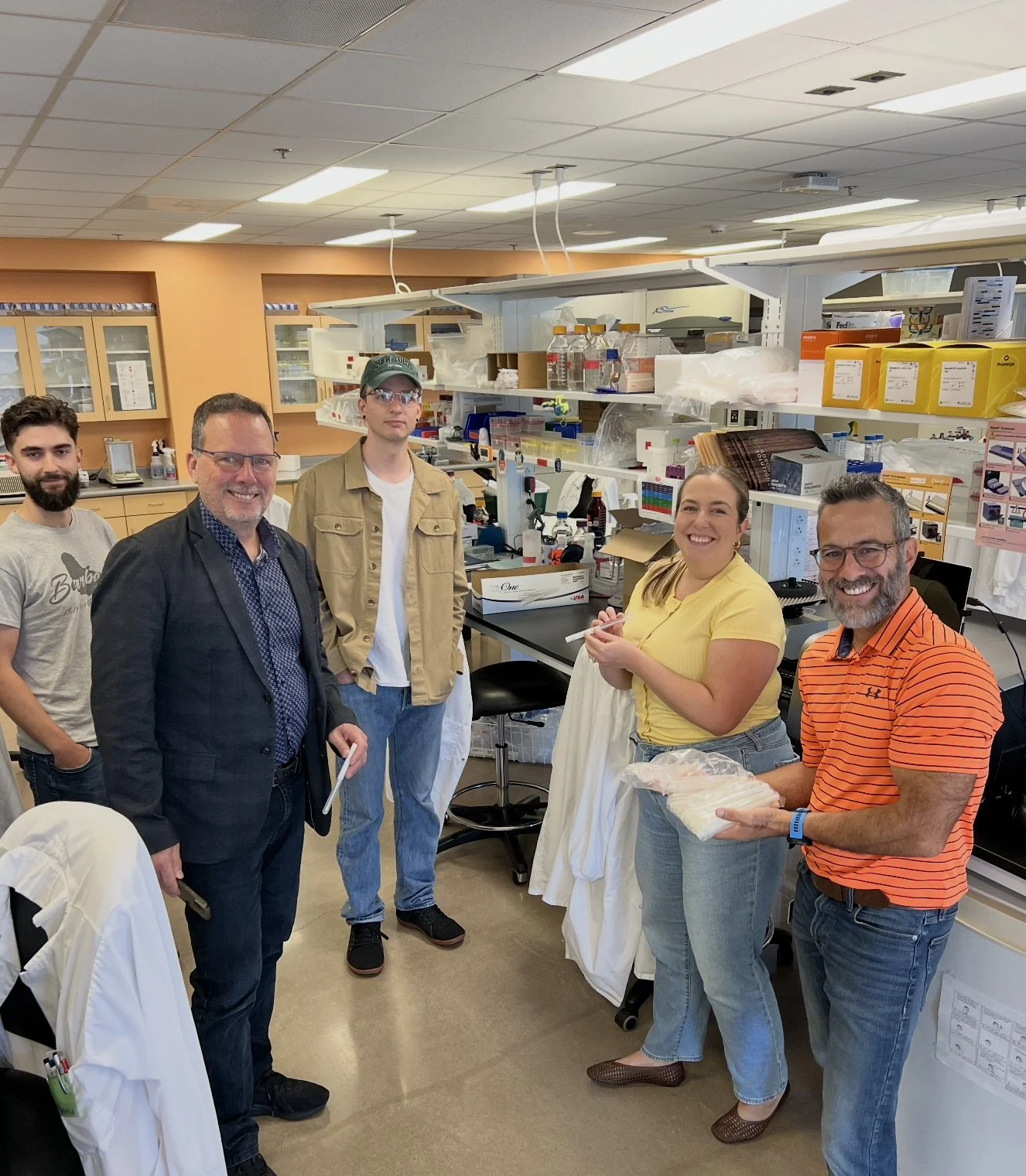
NorthBound Advisory / Agrogene planning meeting in the Lab
